The Glass Between Us
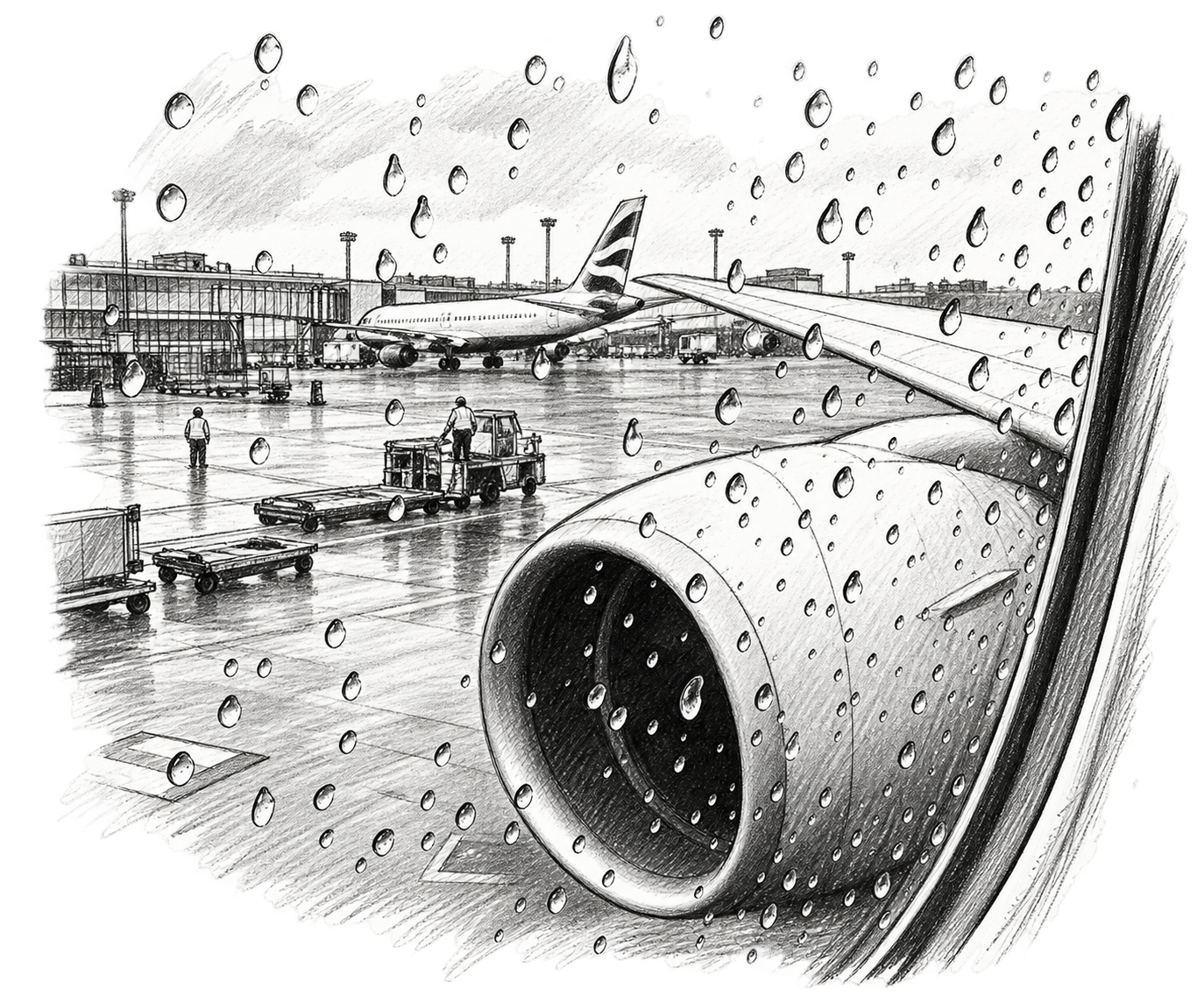
There are few places where human emotion is so easy to see. An airport is one of them.
Not beyond security, where everyone becomes a passenger moving toward a gate, but at the glass doors where people move briefly out of one another's reach. One side is full of people waiting, the other of people arriving. Between them is only a few feet of polished floor, sliding doors, and luggage wheels. And yet so much happens there.
A face that has been scanning a crowd suddenly softens. Someone begins waving before they are even close enough to be recognized. A child lets go of one hand to run toward another. Two adults who would rarely hug in public forget themselves for a moment.
The smile that appears when someone finally spots the person they have been waiting for is unlike most other smiles. It isn't performed or polite. For a moment, there is nothing guarded about it. It is recognition becoming visible.
Leaving carries a different language.
People linger longer than necessary beside the curb. Conversations stretch into things that no longer matter because neither person is quite ready for the next few minutes.
There is practical talk. "Text me when you land. Did you pack your charger? Do you have your passport?"
Those ordinary sentences are rarely only about chargers or passports. They are the instructions we give because instructions are easier than saying goodbye. Underneath the logistics is something simpler: "Come back safely. I'll miss you."
Some departures carry excitement.
A first job, a university across the country, a long-awaited trip, a new life beginning somewhere else. Others carry uncertainty that nobody can solve in the parking lane. Someone leaving home for the first time, someone moving across an ocean, someone returning to a place that no longer quite feels like home. The same automatic doors open for all of them. What changes is what people carry through them.
There are also the people whose stories stay invisible. The ones who step outside and instinctively scan the rows of waiting cars before opening a rideshare app. They lift their own suitcase into the trunk and give the driver an address. Nothing dramatic happens.
Being alone is not the same as being lonely. Plenty of people are accustomed to traveling this way. They know where they are going, and they can get there on their own. But an airport makes another distinction strangely clear.
You can stand among hundreds of people and know whether even one of them is there for you. Perhaps that is what makes the arrivals area so affecting. Among all those strangers, there is sometimes one person whose reason for being there is simply that you have arrived.
Someone decided your arrival was worth an hour in traffic. They checked your flight three times because it might be delayed. They came early and waited. They could have told you to take a cab. Instead, they made the end of your journey part of their day.
The pickup itself is mostly uneventful. You collect your bags, you sit in the car, you ask about traffic. And yet something has already happened.
There was a time in my life when travel was so frequent that airports became entirely ordinary. Early flights, rental cars, hotel rooms, returning home only to pack again. But airports have also marked some of the least ordinary moments of my life. I have carried one-way tickets to countries that would eventually become home. I have celebrated a dear friend's birthday inside an airport because it happened to be where our paths crossed. I have left cities and found friends waiting for me at the other end. I have watched people wave until they could no longer be seen.
Some journeys I made entirely alone. Others began or ended with someone waiting. Something in me still aches when I cannot be there to meet someone I love. And if no one is there at the other end after I've been away, a quieter part of me notices. Not because I cannot manage on my own; I can. Most of us can.
For me, pickups and drop-offs have never felt like transportation. A few miles driven, a delayed dinner, an hour spent watching the arrivals board, a familiar face behind the glass. None of these things are necessary, which is exactly why they matter.
Maybe that is what airports quietly reveal.
We spend much of our lives becoming capable of traveling alone. And we spend the rest hoping that, every now and then, someone will still be waiting on the other side of the glass.