The Story We Asked For Again
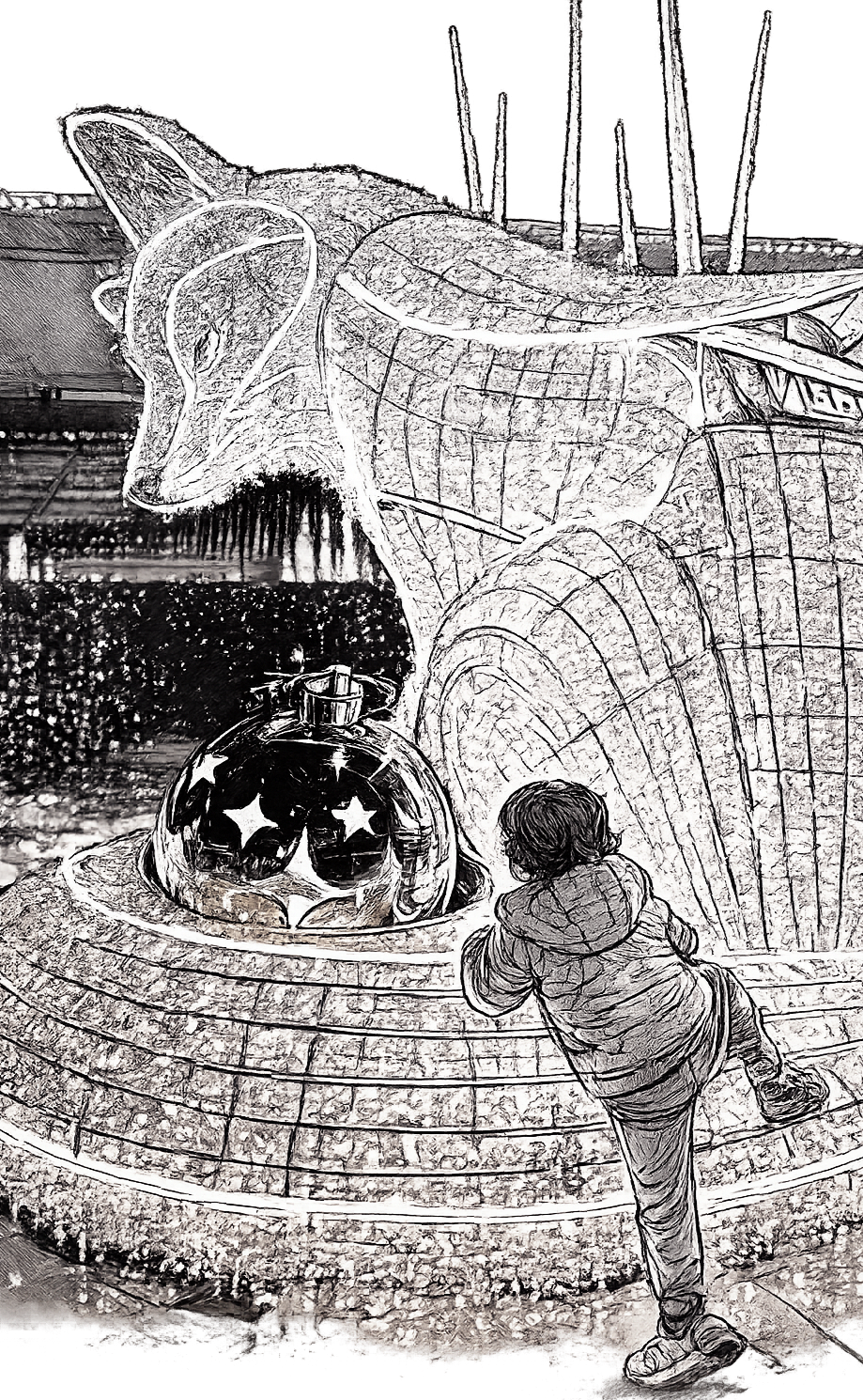
When I was a child, my Pitaji, my grandfather, used to tell me stories at bedtime.
The same stories, many times.
I would lie there wide awake, waiting for the next part even though I already knew it. Sometimes I would interrupt him to remind him of what happened next. Sometimes I would add a detail of my own, as if I were helping the story along.
But I did not need the story because I had forgotten it. I needed him to tell it.
I needed his voice to carry it. The pause before something happened, the familiar turn, the known character, the part I could see coming and still wanted to hear again.
I wanted to be there, next to him, while the world outside became smaller and the world inside the story grew big.
At the time, I only knew that I loved it. Now I understand that the story was also a way of being together.
There is a kind of learning that happens in closeness. Someone’s words become a place you can enter. Their rhythm becomes familiar. Their attention gives you somewhere to rest.
A bedtime story is rarely just a story.
It is a room.
It is a hand resting nearby.
It is the safety of repetition.
It is the joy of knowing what comes next and still wanting to hear it unfold.
Years later, I see this happening again.
My son now waits for bedtime stories from his father with the same kind of hunger. Stories from books, yes, but also entire worlds made between them.
There are characters I have never met. Places that seem to belong only to the two of them. Rules that change and still make sense. My son asks questions, adds details, corrects the plot, and insists on another chapter, another turn, another impossible thing.
He cannot get enough of it. Bedtime, for him, is not complete unless that world opens.
I understand it because I remember being that child. This is what storytelling does at its best. It gives people somewhere to meet.
The body may be ready for sleep, but the inner child is wide awake. Listening, learning, guessing, remembering, imagining, belonging. One person says, come, let me tell you, and another person enters that world for a while.
Sometimes the story we need is the one we already know.
The one we ask for again.
The one we can almost recite.
The one we still want from that particular person, in that particular voice, at that particular time of day.
People carry stories in them.
A story from a grandparent is not the same as a story from a page. A story from a parent at bedtime is not the same as a perfectly recorded version. The words may be similar, but the experience is not.
Because what we are receiving is presence.
That kind of attention gives a child more than language, rhythm, or imagination. It gives them the feeling of being held inside someone else’s attention.
I think many of us are still looking for that feeling. Not in a childish way. In a human way.
We want spaces where something in us can remember. Where a taste, a story, a question, or a small detail can bring us back to a version of ourselves we had not visited in a while. We want to be with other people without having to perform closeness. We want to sit in a room where memory can be individual, but the feeling of being there can be shared. This is part of what Lalibae is built around.
A room where people can arrive as they are. Where the atmosphere permits you to open. Where learning doesn’t announce itself as a lesson.
Because learning has always lived in ordinary places, too.
The edge of sleep. Kitchens. Dinner tables. Long walks. Courtyards. Backyards. The people who knew how to pass something on through presence, and sometimes through story.
A grandparent repeating the same story because a child asks again.
A parent inventing a world at the edge of sleep.
A child who already knows what happens next, but still wants to hear it from the person they love.
These are things worth keeping because they are ordinary enough to disappear if we stop noticing them.
Maybe that is why stories remain with us, because they gave us a place to belong before we even had the words for it.