While Everything is Still a Question
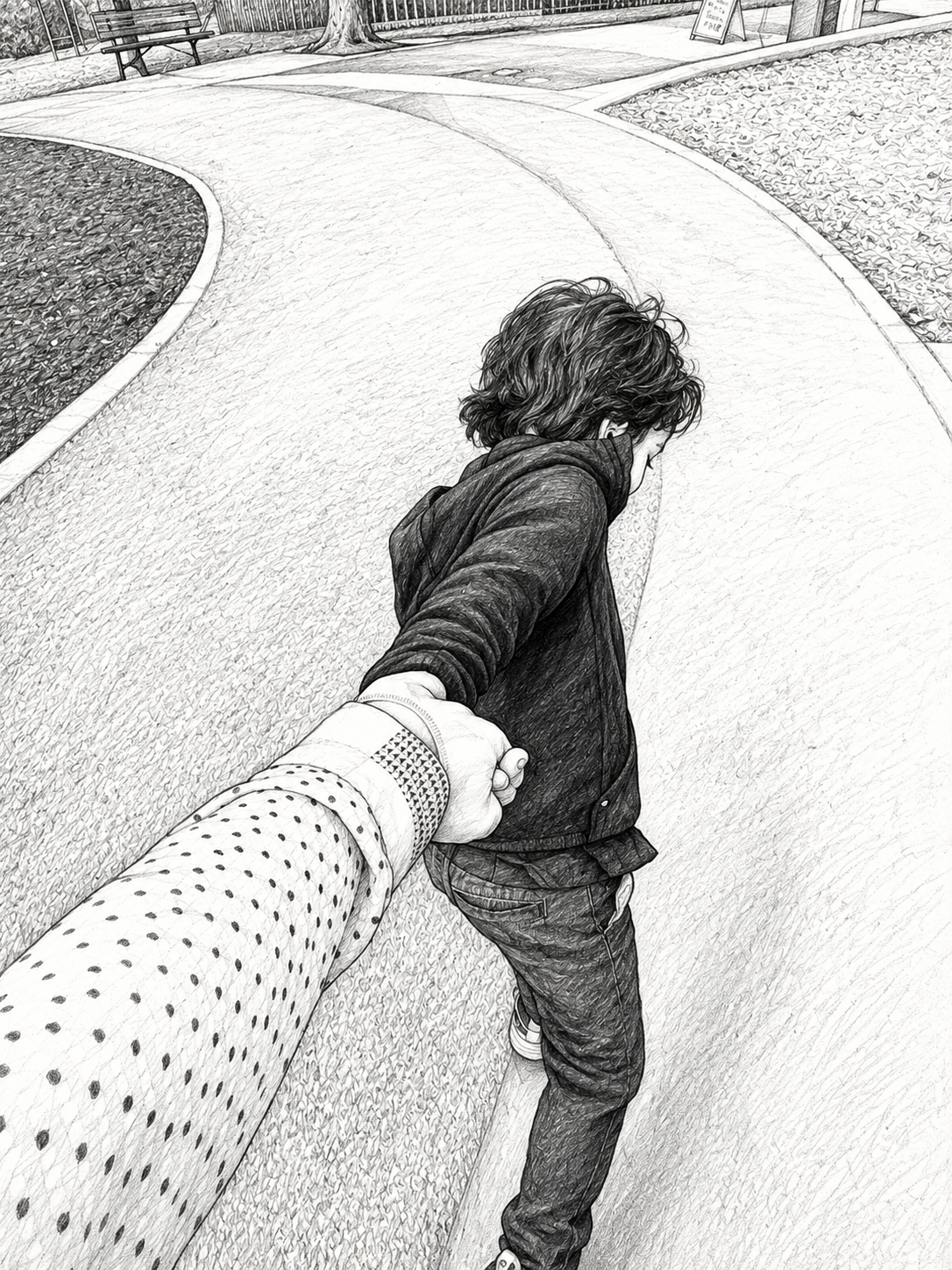
Among the rush of getting out of the house and the anxiety of a first day at a new school, my son asked me a question. “Mama, during nap time, will they turn the lights off in the room so it’s dark?”
Of all the things I had been thinking about for him, this had not occurred to me. I had thought about the classroom, the teachers, whether he would find someone to play with, whether he would know where to put his things. I searched his face for nervousness, excitement, or some combination of the two. He was wondering about the lights.
For a little while, ordinary things are still questions. Which door you use, where your water bottle goes, what happens after lunch, whether the room becomes dark when everyone lies down. Things that will soon require no thought at all have to be discovered one by one. Perhaps that is part of what makes a first feel like a first.
Watching him made me think of my own firsts, although the earliest ones come back mostly in pieces. A uniform. The feeling of a school corridor. Covering new books with brown paper and feeling very proud that they were mine. There are other details I know less certainly. Whether I cried. How easily I walked in. What I said when I came home.
Some may be memories; others may have been told to me often enough that I can almost see them. Some part of those firsts must have stayed with the people who were watching me too. While I was occupied with the classroom, where to sit and what happened next, someone else was noticing how I walked in, what I held on to, what I said afterwards. Perhaps that is one of the peculiar things about a first: the person having it and the person witnessing it can be living quite different parts of the same moment.
Before a first, there is often more imagination than information. We try to picture a place before entering it, wondering who will be there, what it will feel like, and what will happen once the thing we have been anticipating is actually underway. Then it begins, and much of that imagery gives way to surprisingly practical things. The parking spot. The right entrance. Where the bag goes. Where you go.
The emotion seems to sit slightly ahead of us before a first, and slightly behind us afterwards. In the middle of it, we are usually paying attention to whatever the moment requires. Maybe that is why the same first can leave behind different memories, depending on who was there.
I wonder whether a first is always finished the first time something happens. There is the first arrival, but there is also the first return. The first time you walk in and recognize a face, or the first time someone remembers something you said before.
I notice this unfolding at Lalibae all the time. Someone arrives for the first time, not quite knowing how the evening will look. Then, someone else returns for the first time. Suddenly, there is a face they recognize, or somebody remembers a detail they shared previously. A new conversation now has an older conversation sitting behind it.
Then some people come again. By then, parts of the room are familiar, even if the evening itself is not. The people beside them may be different, or someone they already know may tell a story they have never heard before. Coming back does not seem to end firsts. There is something comforting about being remembered while the night itself remains unknown. You can know your way in and still encounter something for the very first time. Perhaps that is all familiarity needs to do: remove a little of the uncertainty without removing the possibility of surprise.
My son may not remember asking about the classroom lights. Soon he will know exactly what happens at nap time, and later he may forget there was ever anything to ask. I may be the one who keeps that particular detail, just as someone else has kept pieces of my early firsts for me.
Years from now, if he thinks about his first day at this school at all, I wonder what he will decide the first actually was. Was it walking through the classroom door? Learning someone’s name? Finding out what happens to the lights when everyone lies down? Or did some part of the first happen later, on an entirely ordinary morning when he walked in already knowing where to go?
I may remember the question about the lights, while he remembers something from those first days that I never noticed.