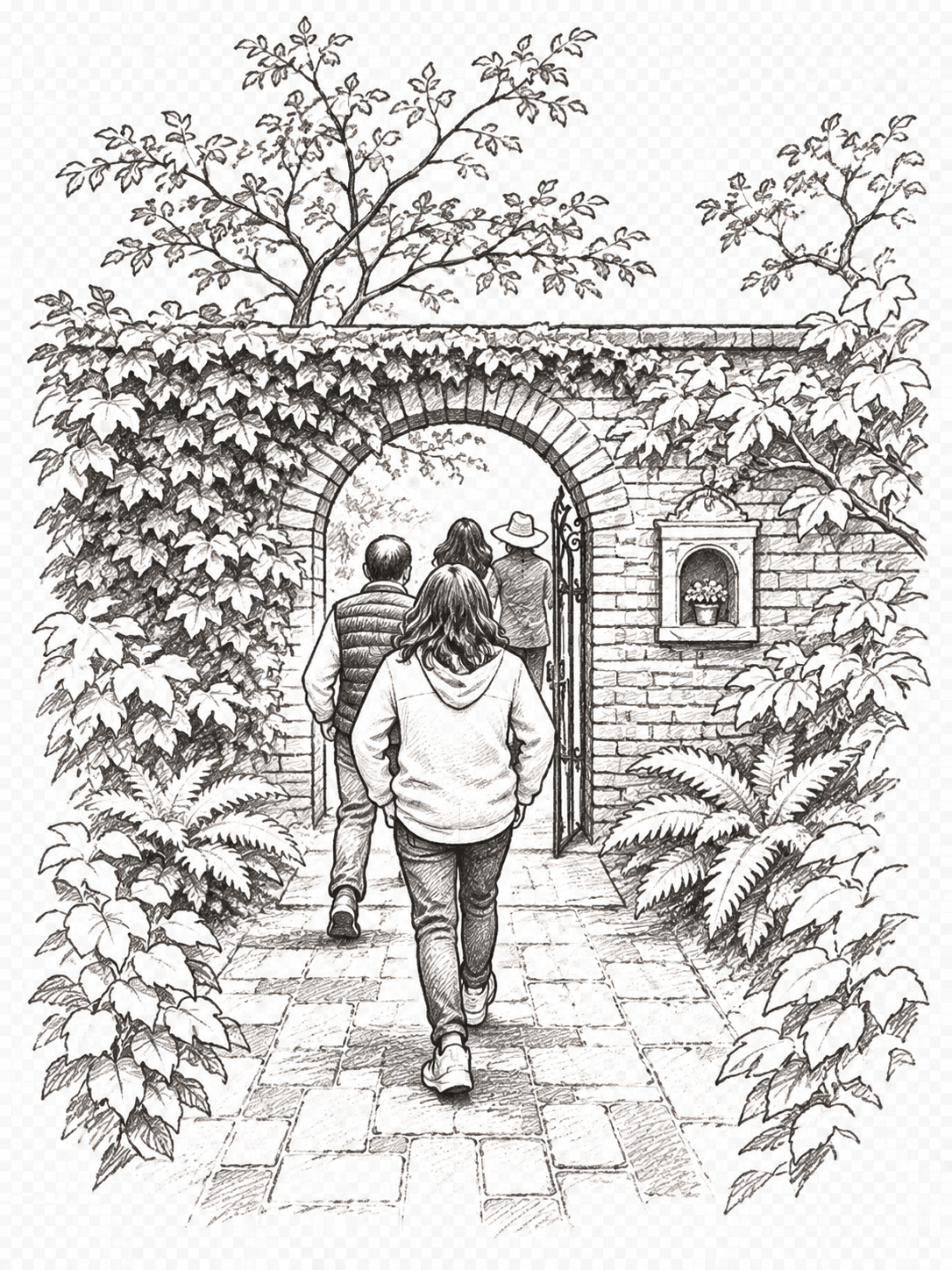
A familiar rustling happens around the house in the evenings, followed by my parents announcing that they are going out for a short walk. Shoes are found, a phone is picked up, and off they go, often for about an hour or more. They have always been walkers. Growing up, I remember them leaving after dinner, sometimes together, sometimes with us, and often meeting friends who were out for a walk themselves. We children had our own reasons to join them. An ice cream, a pastry, or a sweet paan, a folded betel leaf filled with fragrant seeds and sweet preserves, could make an ordinary evening worth looking forward to.
I grew up in a small town in India where much of life happened within walking distance. Neighbors knew what was cooking in one another's kitchens, and a particularly good dish was reason enough to turn up at someone's door. My uncle sometimes handed me a small piece of paper with the name of a sweet written on it and sent me to his friend’s sweet shop. I remember the anticipation, how I would hurry along imagining the treat waiting for me. I carried no money, only a handwritten note that the shopkeeper would accept without question. At the time, I was, of course, more interested in the sweet than in the understanding between the two friends that made the exchange possible.
There was an ease to moving between people's homes that I remember just as fondly. When guests came over, leaving was often a lengthy affair. Someone would get up to go, and my parents would walk them out, sometimes beyond the gate, past the corner, and occasionally all the way to the guests' homes. The conversation would continue along the street, extending a visit that had already lasted the evening. Then my parents would turn around and make the journey back.
Thousands of miles away, my parents have found a new circle of walking companions. After evening tea, messages begin circulating among a group of visiting grandparents about who is heading to the park. They have become friends, celebrating birthdays, organizing potlucks, and keeping track of who is coming from India and who will soon be returning. Some of these friendships may last only a season, but I see how much my parents look forward to them. I find it rather wonderful that a habit they have carried for decades has given them a way to meet people in a country where so much else is different. The walk is much the same as it has always been, although the company is new.
Walking is one of the first things we wait for a child to learn. We encourage them to stand, hold out our hands, and celebrate those first unsteady steps, only to begin rearranging the house around their independence. Gates appear, corners are covered, and suddenly every interesting place comes with someone asking them to be careful. Eventually, the distances grow beyond what we can supervise. The child who once walked toward our outstretched hands begins choosing where to go, and we have to trust that there will be people beyond our reach who will treat them with care.
Walking beside someone has its own small negotiations. One person may want to linger while the other is ready to leave; one may know exactly where they are going while the other is still finding their way. Sometimes we wait, change our plans, or go farther than we intended because we want to remain together. Over the years, these adjustments can become so familiar that we hardly notice who is making them. There may come a time when the same road no longer takes two people where they each need to go. Perhaps that is what makes parting so difficult sometimes. We can know that the road ahead is no longer ours to share and still remember how much of it we once wanted to walk together.
Even people who live close by can be surprisingly difficult to see. We coordinate calendars, drive across town, and arrange visits that might once have begun with a knock at the door. Recently, a neighbor seven houses away had put out a bed that I wanted to reuse. When his wife mentioned that my father and I would come to pick it up, he ran over barefoot, determined to help so my father wouldn't have to lift it. It was such an immediate gesture that I found myself thinking about the distance between knowing someone needs help and deciding to do something about it.
My parents still go for their evening walks. Sometimes they have plans to meet friends, and other evenings they head out by themselves. I imagine part of the pleasure lies in wondering who they might meet, who might stop for a conversation, or who might choose to walk a little farther with them.
There is something wonderful about setting out with a destination in mind, while leaving room for what we hadn't anticipated. We may take the same route many times, with our own reasons for going and our own expectations of what the day might bring. I wonder how often the best part of a walk has been something we never set out to find.