What begins to reveal itself through tea: 01
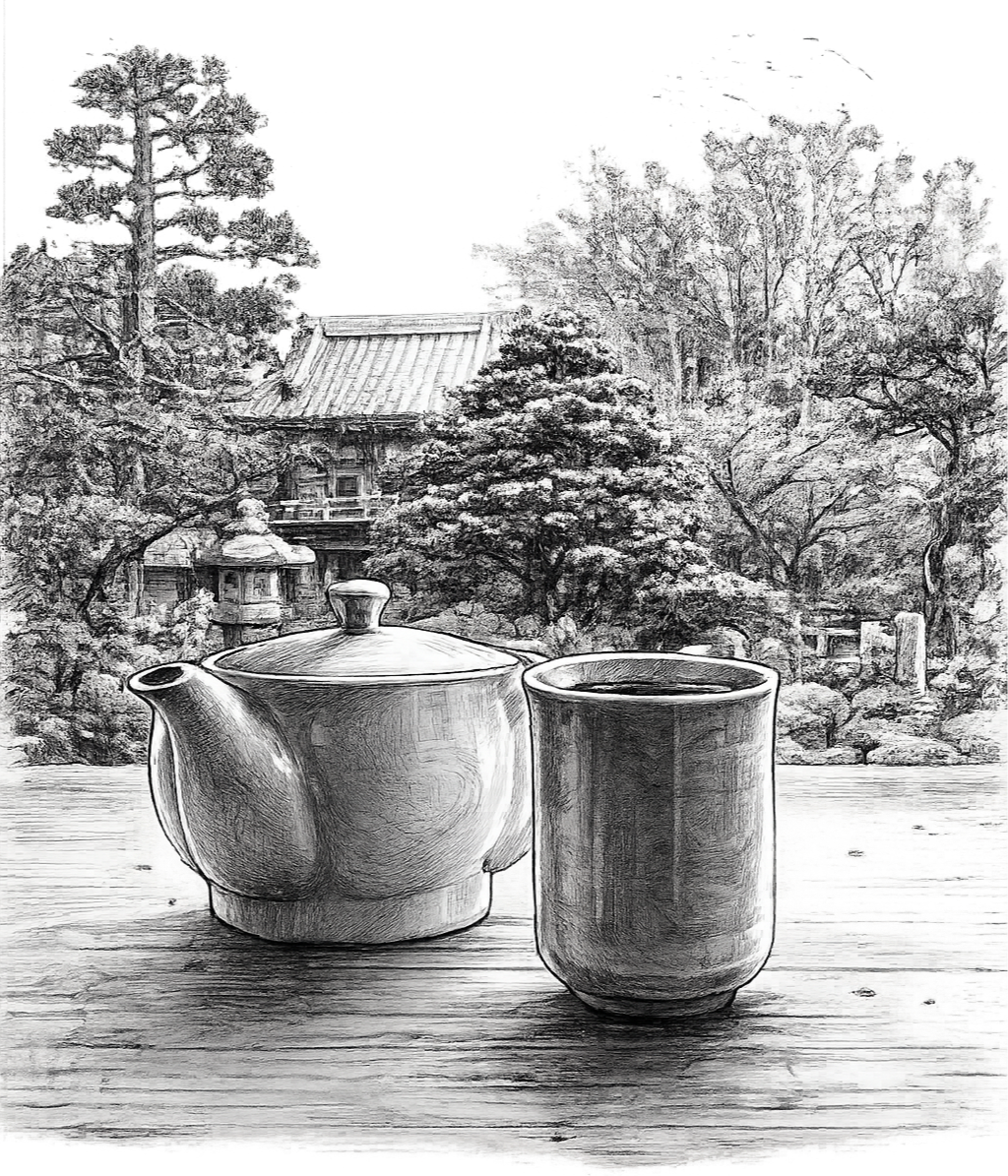
I thought tea would be simple.
Leaves. Water. Temperature. Steeping time. Instead, it has started opening entire histories.
The first weeks of studying tea have felt less like learning about a beverage and more like discovering a language people have spoken in different forms for centuries. Every lesson seems to unfold into something larger.
A discussion about oxidation turns into a conversation about transformation. A lesson on trade routes becomes a story about migration and empire. A tea ceremony reveals ideas about hospitality, beauty, discipline, and presence.
Nothing exists on its own for very long in tea. Everything connects to something older.
The leaf.
The land.
The climate.
The hands that shaped it.
The people who gathered around it. And maybe that is what I’ve become most drawn to.
Somewhere between the early lessons, tea stopped feeling like a subject and started feeling like a trail. Not tea as expertise, but tea as a way of understanding people a little better. Because every culture seems to have built its own relationship with tea.
In China, tea became philosophy, medicine, poetry, and art. In Japan, it became a refinement, a ritual, and attention. In India, it became woven into everyday life. Chai is shared between strangers. Conversations unfolding over boiling milk and worn pots.
Different expressions of the same leaf. There’s something beautiful about that. Especially now, when so much of life feels flattened into sameness.
Tea somehow resists that.
It carries geography. It carries memory. It carries human preference and touch. Even the processing itself feels strangely emotional to me.
The same plant becomes green tea, oolong, black tea, white tea, or pu-erh, depending on how it is processed after harvest. The leaf changes according to environment, timing, pressure, heat, exposure, and movement. I haven’t been able to stop thinking about it.
How much potential exists before shaping begins? How much identity is formed afterward?
And maybe that’s part of why tea feels unexpectedly personal. Because the more I learn about it, the more I find myself thinking about people, homes, rituals, and the kinds of spaces that allow connection to happen naturally. Which, in many ways, sits at the heart of Lalibae too.
I don’t know exactly where this series will go yet. But I have a feeling tea may end up teaching me far more about people than about beverages.
And strangely, I think the leaf itself may be the best place to begin.